
Blog
Marantz Audio Video Receiver for Home Cinema

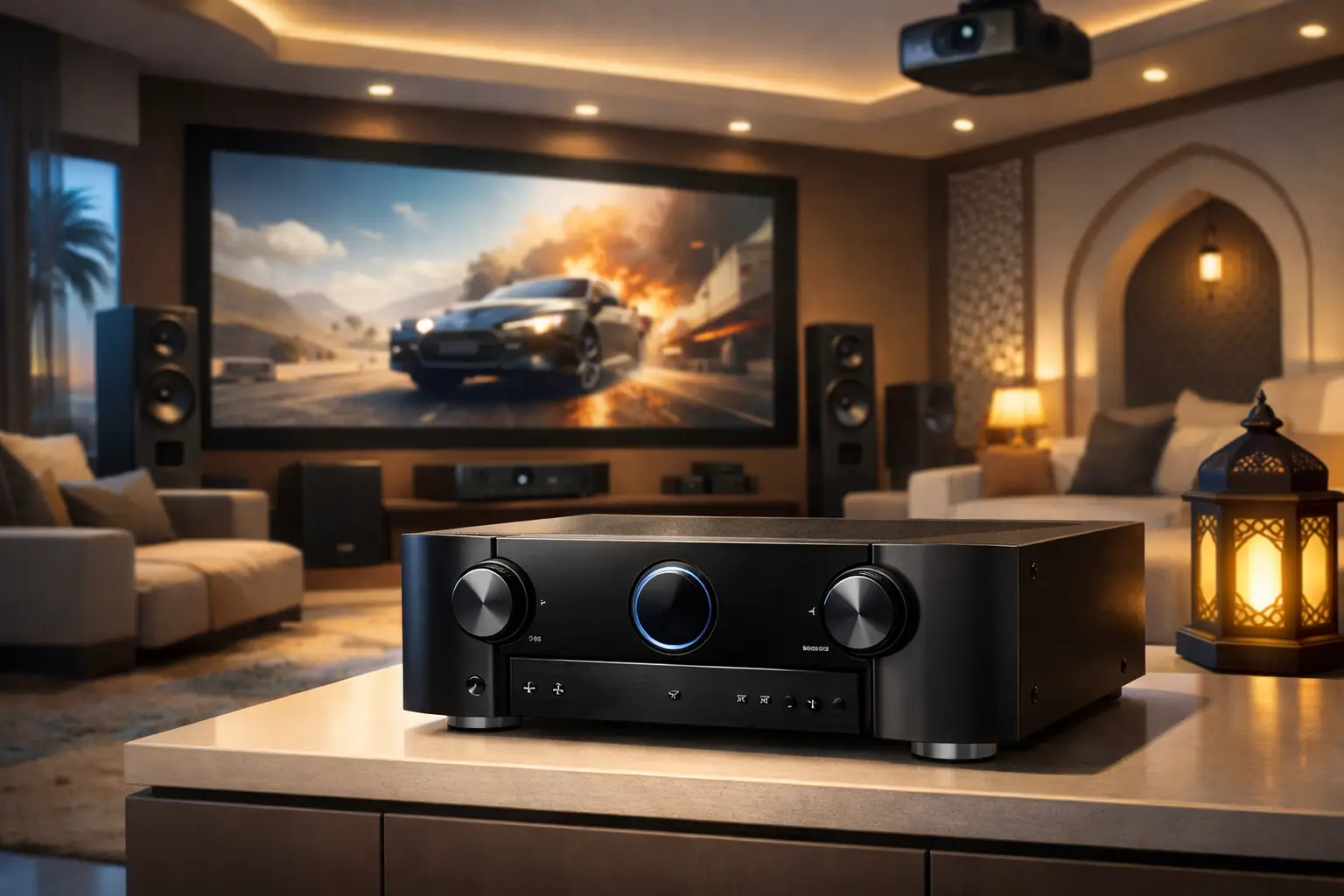
A Marantz audio video receiver is often selected for premium home theaters because it can act as the control center for both cinematic sound and modern video sources. But selecting the receiver is only one part of the decision. Its performance depends on the loudspeaker layout, room acoustics, display specification, source equipment, network stability, installation quality, and commissioning.
For villa owners, developers, and hospitality operators, the right approach is to specify the receiver as part of a complete system rather than as an isolated product. A well-designed installation ensures that power, processing, connectivity, control, cooling, and future service requirements are addressed before the room is finished.
What a Marantz Audio Video Receiver Does
An audio video receiver combines several functions that would otherwise require separate components. It receives content from media players, game consoles, TV services, streaming devices, and other sources; switches video to the display or projector; decodes surround sound formats; powers connected speakers; and manages system calibration.
In a home theater, this central role matters. The receiver must pass the required video resolution and refresh rate to the display while delivering accurate sound to every speaker position. It also needs sufficient connections for current equipment and enough flexibility for equipment that may be added later.
Marantz receivers are commonly considered for dedicated cinemas, media rooms, and high-specification living spaces where sound quality and control integration are priorities. They can support multichannel layouts that create a convincing front soundstage, clear dialogue, controlled bass, and overhead effects when the room and speakers are designed correctly.
Start With the Room, Not the Product List
A receiver cannot correct every limitation created by a poor room plan. Before choosing a model, establish how the space will be used, where viewers will sit, where speakers can be installed, and whether the room will serve a single purpose or multiple activities.
A dedicated private cinema gives the system designer more control. Speakers can be positioned accurately, acoustic treatment can be incorporated behind finishes, and lighting can be coordinated with the viewing experience. A multipurpose family room requires more compromise. Equipment may need to be concealed, speaker locations may be restricted by furniture or glazing, and the receiver must work reliably alongside other home systems.
Display choice also affects the specification. A large-format television and a projection system place different demands on video distribution, cable routing, ventilation, and screen placement. If sources are located away from the receiver, transmission distances and cable standards must be verified during design. Assuming that any existing cable will support high-bandwidth video is a common and costly mistake.
Power Ratings Need Context
Receiver power figures are useful, but they do not tell the whole story. The appropriate model depends on room volume, listening distance, speaker sensitivity, speaker impedance, and the desired playback level. A compact room with efficient speakers may achieve excellent results with moderate amplification. A large cinema room with demanding speakers may require a receiver that supports external power amplification.
This is not simply a question of making the system louder. Adequate power headroom helps maintain control during demanding movie passages, where multiple channels can operate at once. It reduces the likelihood of audible strain when action scenes, orchestral scores, and low-frequency effects peak together.
Speaker matching is equally important. A receiver should be specified with speakers that present a suitable electrical load and share a compatible performance level. Installing premium front speakers with undersized surrounds, or adding subwoofers without proper calibration, can leave the system unbalanced. The best results come from treating the speaker package, receiver, and room as one engineered solution.
Channel Count and Speaker Layout
The number of amplifier channels determines the speaker layouts a receiver can support directly. A conventional surround arrangement may be sufficient for a smaller media room. A more immersive cinema can add ceiling or height speakers for object-based surround formats, creating movement above and around the audience.
The correct layout depends on room geometry and seating, not on the highest channel count shown on a specification sheet. Ceiling speakers placed too close to the listening position, rear speakers blocked by a sofa, or side speakers installed at inconsistent heights can weaken the intended effect.
Subwoofer design deserves the same attention. Low frequencies interact strongly with room dimensions, causing some seats to receive excessive bass and others to receive too little. One carefully positioned subwoofer can perform well in a modest room, while larger rooms may benefit from multiple units and a detailed calibration process. Placement, crossover settings, phase alignment, and level balancing should be verified during commissioning.
Video Connectivity and Source Planning
A Marantz audio video receiver should be checked against the display and source requirements before procurement. This includes video resolution, high dynamic range support, refresh-rate requirements, audio return capability, and the number of HDMI inputs required. These details are particularly relevant where gaming, streaming, satellite television, media servers, or commercial content sources are part of the brief.
Plan the equipment rack at the same time. Receivers generate heat, especially when driving several channels for extended periods. A closed cabinet with no ventilation can shorten equipment life and lead to thermal shutdowns. Proper airflow, service access, organized cabling, and clearly labeled connections are practical requirements, not optional finishing details.
Network connectivity is also increasingly relevant. A stable wired network connection is usually preferable for fixed AV equipment, particularly where software updates, network audio functions, control systems, or streaming services are used. Wi-Fi may be suitable in some locations, but it should be assessed against local signal conditions and network traffic rather than assumed to be sufficient.
Calibration Is Where the System Becomes a Cinema
Automatic room calibration can provide a useful starting point, but it is not a substitute for professional setup. The process measures speaker distance, levels, timing, and room response, then applies corrections intended to improve consistency at the listening position.
The measurements must be taken carefully, using the correct microphone positions and a quiet room. After calibration, an installer should review crossover settings, speaker polarity, subwoofer integration, dialogue clarity, and overall tonal balance. A technically completed installation can still require adjustment if dialogue is too low, bass is uneven, or effects channels are too prominent.
Commissioning should include real content, not just test tones. A short film sequence can reveal issues that measurements alone may not show, such as distracting reflections, an incorrect center-channel level, or a display setting that compromises dark scenes. This final stage is where the system is tuned to the client’s expectations and the room’s actual behavior.
Integration, Control, and Service Access
For a high-end residence or managed property, the receiver should operate as part of the wider technology environment. It may need to work with centralized control, automated lighting scenes, motorized screens, network infrastructure, TV distribution, and equipment-room power management. This requires coordinated design between AV, electrical, interior, and network teams.
Simple operation is essential. A cinema system should not require users to select multiple inputs or search through menus before watching a movie. A properly commissioned control interface can prepare the room, select the correct source, set the system to the intended listening mode, and return it to a known state when use is complete.
Serviceability should be considered from day one. Equipment installed behind permanent joinery without access becomes difficult to inspect, update, or replace. Clear cable labeling, accessible rack layouts, documented settings, and user training protect the investment long after handover. High End Electronics approaches these details through consultancy, system design, installation, commissioning, and ongoing support across Qatar.
When a Receiver Is the Right Choice
A receiver is an effective solution when a project needs high-quality multichannel performance, practical source switching, and integrated control in one central component. It is particularly well suited to media rooms and private cinemas where the speaker count, room size, and performance target align with its amplification capability.
For very large cinemas or highly specialized systems, separate processing and external amplification may offer greater expansion and power flexibility. That does not make a receiver the wrong choice. It means the specification should follow the project requirements, not a predetermined equipment category.
The strongest home theater installations begin with a clear room plan and end with careful commissioning. Choose the Marantz receiver that fits the speaker system and infrastructure, then give it the installation, calibration, and support needed to perform as intended.