
Blog
Video Wall Installation Services That Work

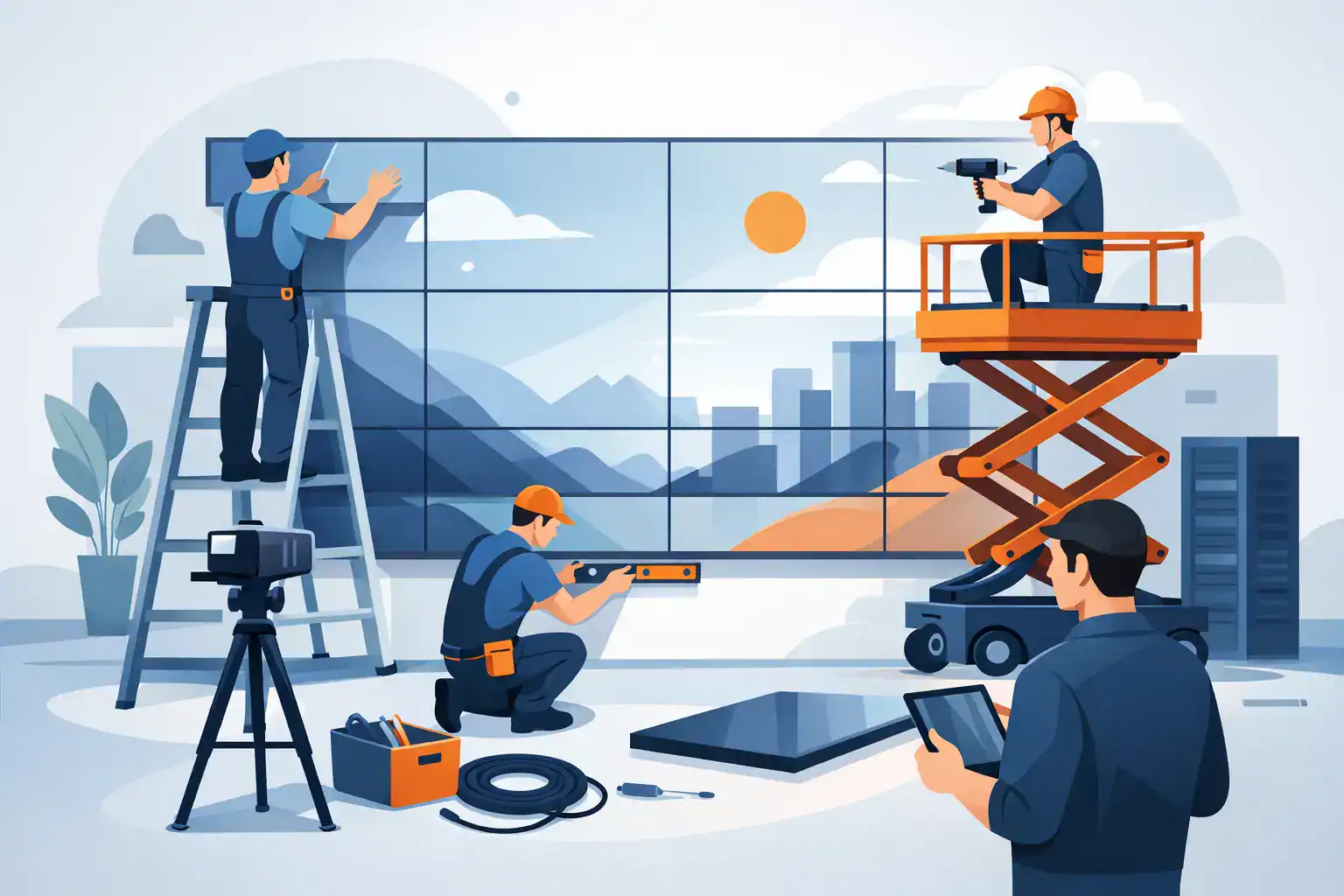
A video wall that looks impressive in a product brochure can still fail on site. The bezels may not line up, brightness may fight the ambient light, content may scale poorly, or maintenance access may be overlooked. That is why video wall installation services are not just about mounting screens. They are about engineering a display system that performs reliably in the actual environment where it will be used.
For property developers, business owners, hospitality operators, and facilities teams, the real question is not whether a video wall can be installed. It is whether the system will support daily operations, brand presentation, and long-term serviceability without creating avoidable technical issues. A proper installation process addresses that from the first site assessment through commissioning and support.
What video wall installation services should include
At a professional level, video wall installation services begin well before equipment arrives on site. The display type, screen size, aspect ratio, viewing distance, ambient lighting, source equipment, control requirements, and wall structure all affect the final result. If any of those decisions are made in isolation, the system may look acceptable on day one but become difficult to manage over time.
A complete scope typically covers consultancy, system design, equipment selection, structural and power coordination, cabling, mounting, display alignment, controller setup, content source integration, testing, commissioning, and user training. For larger commercial and institutional projects, this may also include network integration, remote monitoring, rack build, and coordination with MEP and fit-out contractors.
That lifecycle approach matters because a video wall is rarely a standalone product. In a boardroom, it may need to integrate with conferencing systems, presentation switching, and room control. In retail, it may connect to signage players and centralized content scheduling. In hospitality, it may be tied to branding, event spaces, and customer experience zones. The installation has to serve the application, not just the hardware.
Choosing the right display approach
Not every project needs the same video wall architecture. LCD video walls remain common where fine image detail, controlled indoor lighting, and cost discipline are important. Direct view LED is often selected for larger formats, wider viewing angles, and stronger visual impact, especially in public-facing spaces. Projection-based walls still have a place in some specialist environments, though they are less common in mainstream commercial installations.
The right choice depends on use case. A corporate lobby may prioritize visual impact and clean integration with architectural finishes. A control room may prioritize 24/7 operation, redundancy, readability, and front-service access. A retail environment may prioritize brightness, flexible content layouts, and operating hours that demand durable components. Premium residential projects can shift the focus again, where aesthetics, acoustic planning, and concealment may matter as much as image performance.
This is where design discipline saves time and money. It is easy to overspecify a display and underdeliver on infrastructure, or choose a lower initial equipment cost that creates service limitations later. The best result usually comes from balancing image quality, operating profile, maintenance strategy, and total installed system cost.
Site conditions affect everything
A video wall installation succeeds or fails on details that are often invisible to the end user. Wall flatness, substrate strength, electrical routing, cooling, access clearances, and cable paths all matter. So does the ambient light level at different times of day. A display installed opposite large glazing, for example, may require a different brightness specification and anti-glare consideration than one installed in a controlled interior environment.
Mounting accuracy is another major factor. With multi-panel LCD walls, even minor inconsistencies in the structure or mounting system can create visible alignment issues. With LED walls, cabinet tolerances, subframe quality, and installation precision directly affect visual uniformity. These are not cosmetic concerns alone. Poor mechanical execution can complicate service work and reduce system life.
Power and signal design also deserve careful planning. Displays, controllers, media players, matrix switchers, and networked endpoints must all be coordinated correctly. In larger projects, equipment may be distributed across display locations, AV racks, and IT rooms. Without clear engineering, troubleshooting becomes slower and future expansion becomes harder.
Why commissioning is not optional
Many display problems appear only after the screens are mounted and content starts running. Colors may not match across panels. Scaling may distort graphics. Control interfaces may confuse users. Wake-sleep scheduling may fail. Source switching may introduce delays that frustrate operators.
That is why commissioning is a core part of professional video wall installation services. Commissioning verifies that the display hardware, signal chain, content playback, control logic, and user workflows are functioning as intended. It also confirms that the installed system matches the design brief.
For commercial and institutional clients, this stage should include image calibration where appropriate, controller configuration, content layout validation, failover checks if specified, and operating tests under real conditions. User training also matters. A well-installed system can still underperform if staff are unsure how to select sources, update content, or respond to faults.
Video wall installation services for different environments
The installation method and support model should reflect the operating environment.
In corporate spaces, video walls often serve reception areas, executive briefing rooms, collaboration spaces, and auditoriums. These projects usually require clean design integration and dependable switching between presentation, signage, and conferencing sources. Reliability and ease of control tend to matter more than novelty.
In retail and showroom settings, the priority is often visual impact and content flexibility. Brightness, viewing angles, and content management become central because the display is part of the sales environment. If the wall is customer-facing all day, service responsiveness also becomes more important.
In hospitality, video walls may support branding, events, digital wayfinding, sports viewing, or high-traffic guest areas. Here, integration with operational schedules and aesthetic finishes is critical. The system has to perform consistently while fitting the overall interior design.
In control rooms and monitoring environments, function takes priority over appearance. Operators need legibility, uptime, stable signal management, and maintainability. Front-access service, redundant components, and thermal management often become deciding factors.
In premium residential projects, the conversation changes again. Homeowners may want a large-format entertainment feature without compromising interior style. That usually requires careful planning around speaker placement, room lighting, source integration, and intuitive control.
What to look for in an installation partner
If a provider mainly sells displays, the project can become product-led rather than solution-led. That creates risk when multiple systems need to work together. A stronger model is to work with an AV integrator that can take responsibility for design, procurement, installation, commissioning, and after-sales support.
Look for practical evidence of execution capability. That includes experience across commercial and residential environments, understanding of structured cabling and networked AV infrastructure, coordination with other trades, and a clear process for testing and handover. It also helps to ask how service will be handled after completion. Screen technology is only one part of long-term performance. Support response, spare strategy, and system documentation matter just as much.
High End Electronics approaches these projects as part of a broader integrated systems scope, which is often the right fit for clients who do not want separate vendors handling display, control, content hardware, and infrastructure in isolation.
The cost question clients should really ask
Price always matters, but the more useful question is what the quoted scope actually covers. A lower quote may exclude structural preparation, controller programming, calibration, content integration, or training. It may also assume ideal site conditions that do not exist in practice.
A realistic proposal should define equipment, installation method, cabling scope, integration points, commissioning, and support expectations. That allows decision-makers to compare like for like. It also reduces variation claims and delays during execution.
For many clients, the best value comes from getting the design right early. That avoids rework, protects aesthetics, and reduces operational problems after handover. A video wall is a visible investment, but the engineering behind it is what determines whether it remains an asset or becomes a maintenance issue.
When video wall installation services are planned as a complete system rather than a mounting exercise, the result is simpler to operate, easier to support, and more effective in the space it was built for. That is the standard worth holding any project to.