
Blog
Best Projector Screens for Cinema Rooms

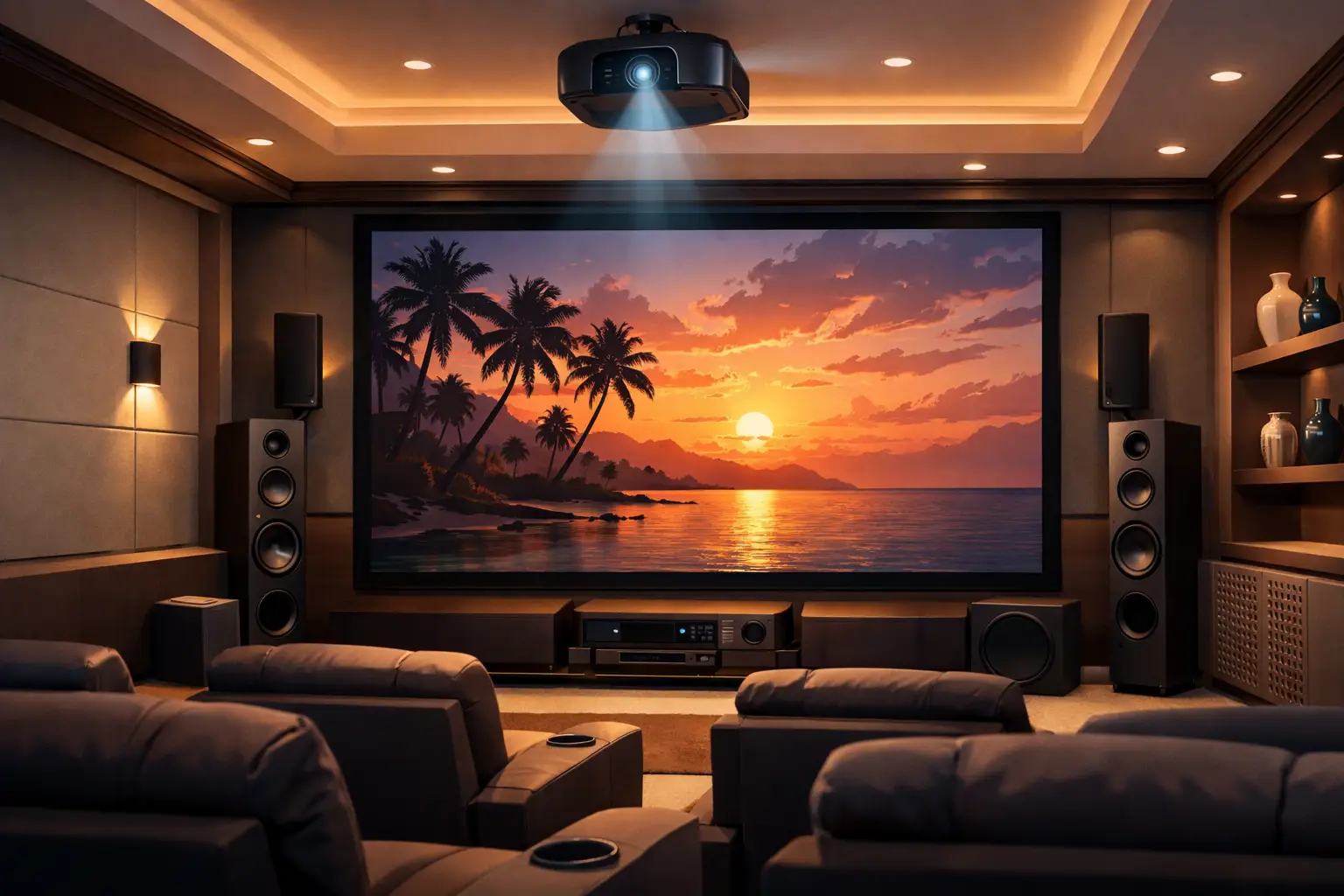
A premium projector can underperform very quickly when the screen is wrong. In private cinema rooms, media lounges, and dedicated screening spaces, the best projector screens cinema projects use are not chosen by brand name alone. They are selected around room dimensions, projector output, ambient light control, speaker placement, seating geometry, and the finish level expected from the installation.
That is why screen selection should be treated as a system decision, not a final accessory. A screen affects brightness, black level, perceived sharpness, acoustic transparency, and even how cleanly the room can be integrated from an architectural standpoint.
What makes the best projector screens cinema-grade?
The short answer is balance. A strong cinema screen does not simply reflect more light. It must support the projector’s capabilities without introducing visible texture, hot spotting, color shift, or acoustic compromise.
In practical terms, the right screen depends on how the room will actually be used. A dedicated private cinema with controlled lighting has very different requirements from a high-end family media room with some ambient light during daytime viewing. A boardroom screening space, hospitality lounge, or majlis-based entertainment setup also changes the specification because usage patterns are different.
For serious cinema performance, four variables matter most: screen material, gain, acoustic behavior, and installation format. These should be reviewed together, because improving one area can create a trade-off in another.
Screen material matters more than most buyers expect
The material defines how the image looks before the projector is even calibrated. Matte white remains the standard choice for light-controlled cinema rooms because it provides even reflection and stable color reproduction. If the room can be darkened properly, this is often the cleanest path to a natural image.
Gray screens can improve perceived contrast in rooms with some uncontrolled ambient light, but they also reduce overall brightness. That can work well with a high-output projector, but less powerful models may struggle to deliver the image impact expected on larger screen sizes.
Ambient light rejecting materials are useful in multipurpose spaces, but they are not always the best answer for a dedicated cinema. Some ALR surfaces narrow the optimal viewing angle or create image uniformity issues if projector placement is not exact. In a properly designed theater room, a conventional reference-grade surface is often the better choice.
Gain should fit the room, not marketing claims
High gain sounds attractive because it promises a brighter image, but brightness alone does not define quality. Higher-gain materials can produce hot spots, reduced off-axis performance, and less natural image uniformity.
For most cinema environments, moderate gain is the safer option. A screen in the 1.0 to 1.3 gain range is commonly effective, depending on projector brightness, throw distance, and desired image size. If the room has wide seating positions, keeping gain moderate usually preserves a better experience for everyone in the audience.
Lower-gain materials can support deeper black perception in darker rooms, though they demand more from the projector. This is where proper system design matters. The screen cannot be specified in isolation from lumen output, lensing, and calibration targets.
Fixed frame or motorized: which cinema screen is better?
For the best projector screens cinema rooms generally favor fixed-frame designs. A fixed frame keeps the screen surface flat and consistently tensioned, which helps preserve image precision across the entire viewing area. It also tends to provide the most professional visual finish in a dedicated theater.
Motorized screens make sense where flexibility is required. In a living room, multifunction hall, or executive space where the screen must disappear when not in use, a recessed motorized system can be the right solution. The trade-off is that motorized screens depend heavily on build quality, installation accuracy, and long-term mechanical reliability.
Tab-tensioned motorized models are preferable for larger sizes because they maintain better surface flatness. Non-tensioned options may be acceptable in more casual environments, but in premium cinema applications they usually fall short.
A concealed motorized installation can look excellent when coordinated early with ceiling details, power provision, and control integration. If it is treated as an afterthought, compromises usually show in the finished result.
Acoustic transparency changes the entire room layout
One of the most important decisions in cinema design is whether the front speakers should be placed around the screen or behind it. If the goal is a true cinema layout, an acoustically transparent screen is often the better path.
Perforated or woven acoustically transparent materials allow the left, center, and right speakers to sit behind the image, aligning dialogue and on-screen action more naturally. This creates a cleaner front wall and improves the sense that sound is coming directly from the picture rather than below or beside it.
There are trade-offs. Some acoustically transparent materials reduce brightness slightly, and lower-quality options can introduce visible texture or acoustic coloration. Speaker positioning, screen distance, and room treatment all need to be coordinated carefully. This is not a place to improvise.
For many high-end private cinemas, however, the performance advantage is worth it. When specified properly, an acoustically transparent screen supports both better aesthetics and better sound localization.
Best projector screens cinema buyers should match to room type
A dedicated dark-room cinema usually benefits from a fixed-frame matte white or acoustically transparent screen, depending on speaker layout. This type of room is built around image fidelity, so the screen should be selected for neutrality and consistency rather than ambient-light compensation.
A luxury media room often needs a more flexible approach. If some daytime use is expected, screen material may need to support moderate ambient light while still preserving acceptable viewing angles and color stability. In these spaces, the best result often comes from balancing screen technology with controlled lighting, curtains, and projector brightness rather than trying to force the screen to solve every problem.
Commercial and institutional screening spaces need another layer of planning. Usage may include presentations, video playback, and mixed-content viewing rather than film only. That changes aspect ratio decisions, gain targets, and control requirements. A screen for this environment must support the operational purpose of the room as well as image quality.
Size, aspect ratio, and viewing distance
Bigger is not always better. The correct screen size depends on viewing distance, projector performance, and the visual comfort of the audience. A screen that is too large for the room can expose projector limitations, reduce brightness, and create fatigue for front-row viewers.
Aspect ratio is equally important. For dedicated cinema, 16:9 is still practical for many users because streaming platforms, sports, and general content dominate everyday viewing. Scope formats can deliver a more theatrical presentation, but they require more advanced planning in projector setup, screen masking, and content management.
This is where many installations go off track. Buyers focus on diagonal size first, then try to fit the rest of the system around it. The better approach is to define seating positions, projector location, room width, and content priorities before finalizing the screen format.
Why installation quality matters as much as the screen itself
Even excellent screen material can disappoint if the installation is poor. Alignment errors, waviness, improper wall preparation, incorrect projector throw, and uncoordinated lighting all reduce final performance.
In premium residential and commercial projects, the screen should be specified as part of a complete AV design package. That includes structural support, cable routing, control integration, speaker positioning, ventilation planning, and commissioning. A cinema room is a coordinated environment, not a collection of independent products.
For clients building private theaters or high-performance media spaces in Qatar, this coordination is often what separates a visually impressive room from one that delivers consistent day-to-day performance. High End Electronics approaches screen selection within the full system design so the final result works acoustically, visually, and operationally.
How to choose with fewer mistakes
The most reliable path is to start with the room, not the catalog. Determine whether the space is dedicated or multipurpose, whether speakers belong behind the screen, how much ambient light can be controlled, and what content will be watched most often. Then match projector capability to screen size and material instead of selecting each element independently.
It also helps to be realistic about compromises. If the room must function as both a social lounge and a serious cinema, no single screen material will behave exactly like a reference theater surface under all conditions. The best specification is the one that fits the room’s actual use case and can be supported properly through design, installation, and calibration.
A well-chosen cinema screen does not call attention to itself. It simply allows the image, the sound, and the room to perform as one complete system. That is usually the clearest sign you chose correctly.